Generator
python3源码
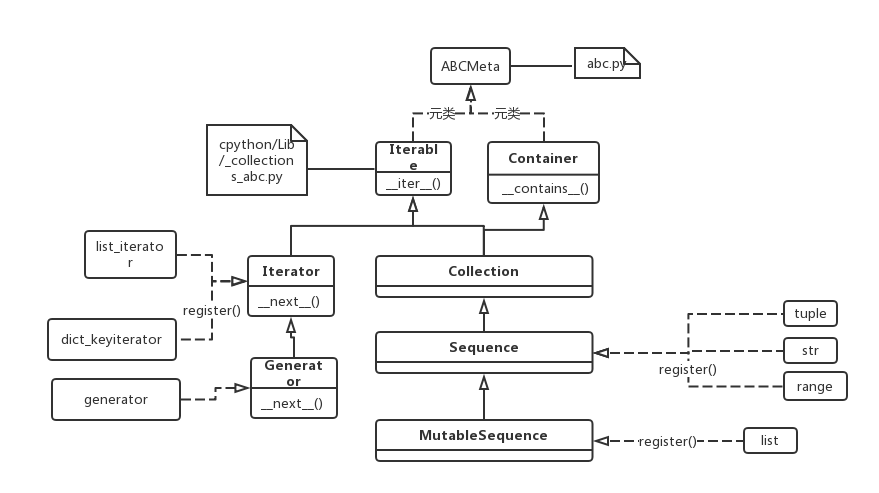
- python3中确实有内建的class generator
- class Generator继承自class Iterator,所以class generator的实例对象可以直接作为next()参数,而无必要先调用iter();当然,generator实例也可用于”for loop”
- generator和一般的iterator,e.g. list_iterator,有什么区别呢?
How to define a generator
Generator functions
- 定义
If a function contains at least one yield expression (it may contain other yield or return statements), it becomes a generator function. 无论是有多个yield()语句,还是在for loop中调用yield(),例如 reverse the string.
yield和return的区别, while a return statement terminates a function entirely, yield statement pauses the function saving all its states and later continues from there on successive calls.
执行过程
(1)When a generator function is called, it returns an iterator known as a generator, 此时,不执行函数体中的任何语句。
(2)第一次执行“next(the-generator)”时,从”the generator function”的函数体的第一行开始,直至“第一条yield expression”为止,且“这条yield表达式”并未执行,然后returning the value of expression_list to the generator’s caller
但是注意啦,The value of the yield expression after resuming depends on the method which resumed the execution. If __next__() is used (typically via either a for or the next() builtin) then the result is None. Otherwise, if send() is used, then “yield表达式的值” will be the value passed in to that method. 这一段的理解有点困难,示例代码可以参见 Code Examples, 我对这段代码的理解如下:
- 客户端代码第1次调用next(generator)时,并未执行value = (yield value),而是停在了上述表达式右侧的”yield expression”,把value的值1返回给了next(generator),作为print()的参数打印了出来
- 客户端代码第2次调用next(generator)时,value = (yield value) 才被执行,而(yield value)的值是None,所以在给value赋完新值None后,程序又停在了value = (yield value)右侧的(yield value),把value的值None返回给了next(generator)用于print()
示例代码
1 2 3 4 5 6 7 8 9 10 11 12 13 14 | # A simple generator function
def my_gen():
n = 1
print('This is printed first')
# Generator function contains yield statements
yield n
n += 1
print('This is printed second')
yield n
n += 1
print('This is printed at last')
yield n
|
客户端代码如下:
(1)使用next()
1 2 3 4 5 6 7 8 9 10 11 12 13 14 15 16 17 18 19 20 21 22 23 24 25 26 27 28 29 | # It returns an iterator object but does not start execution immediately.
>>> a = my_gen()
# We can iterate through the items using next().
# 代码从第3行开始执行至第一个yield语句, the function is paused and the control is transferred to the caller.
#yield后表达式的值被返回给caller
>>> next(a)
This is printed first
1
# Local variables and theirs states are remembered between successive calls.
# my_gen()从上次挂起的地方继续执行至第二个yield语句
>>> next(a)
This is printed second
2
>>> next(a)
This is printed at last
3
# Finally, when the function terminates, StopIteration is raised automatically on further calls.
>>> next(a)
Traceback (most recent call last):
...
StopIteration
>>> next(a)
Traceback (most recent call last):
...
StopIteration
|
(2)使用for loop
1 2 3 4 5 6 7 8 9 10 11 | # my_gen() return an iterable iterator
# item就是my_gen()中每一条yield语句后表达式的值
for item in my_gen():
print(item)
#输出如下
This is printed first
1
This is printed second
2
This is printed at last
3
|
Generator expressions
1 2 3 4 5 | >>> ge = (x**2 for x in [1,2,3])
>>> ge
<generator object <genexpr> at 0x00000000024B8AF0>
>>> type(ge)
<class 'generator'>
|
- generator expression creates an anonymous generator function.
- generator expression返回的直接就是一个generator,而无需像generator function要调用后才会返回一个generator
- 上述示例代码中的”x**2”就是generator function中的”expression_list of yield”,即调用next(ge)后的返回值
- 每调用一次next(ge)时的执行过程也和generator function相同——从上一条yield的下一条语句执行到下一条yield语句之前。
- 和“列表推导式”的区别在于——using round parentheses.
两者的比较
- 从本质上讲是一样的,因为函数和括号内部,都是一段需要执行的语句。
- 让一个函数返回“生成器推导式” 与 直接定义一个“生成器函数”之间该如何选择呢?
使用场景
- 当函数需要返回一系列结果,而非一个单值时,可以考虑定义“生成器函数”。
generator function的缺点与改进
有一个份文件,每一行代表了全球一个城市的游客数量。下面,要对这个文件进行分析,例如,1)统计来每个城市的旅游的人数占总游客数的百分比;2)…
- 很容易想到用generator function来读取文件中的数据,然后以此generator为参数,传递给下游分析函数
1 2 3 4 5 6 7 8 9 10 11 12 13 14 15 16 17 18 | def read_visits(data_path):
with open(data_path) as f:
for line in f:
yield int(line)
#求百分比的分析函数
def normalize(numbers):
total = sum(numbers)
result = []
for value in numbers:
percent = 100 * value / total
result.append(percent)
return result
#客户代码
it = read_visits('my_numbers.txt')
percentages = normalize(it)
print(percentages)#输出为空,[]
|
上述代码中,客户代码最终输出为空的原因是“python内建的迭代器机制只能产生一轮结果”
- 解决办法:把generator function升级为“iterable 容器”
1 2 3 4 5 6 7 8 9 10 11 12 13 | class ReadVisits(object):
def __init__(self, data_path):
self.data_path = data_path
def __iter__(self):
with open(self.data_path) as f:
for line in f:
yield int(line)
#客户代码
visits = ReadVisits(path)
percentages = normalize(visits)
print(percentages)
|
Pipelining Generators
Pipelining Generators的意思就是把多个generator串联起来。
Suppose we have a log file from a famous fast food chain. The log file has a column (4th column) that keeps track of the number of pizza sold every hour and we want to sum it to find the total pizzas sold in 5 years. 示例代码 有一些不足,我给出了完善
1 2 3 4 5 6 7 8 | #始终用'b'打开文件
with open('sells.log', 'rb') as fp:
#读取非空行
pizza_col = (line.split(b' ')[3:4] for line in fp if line.strip())
#可以就把pizza_col当作“列表推导式”,如此,for x in pizza_col就很好理解了
per_hour = (int(x) for x in pizza_col if x != 'N/A')
#sum(iterable)
print("Total pizzas sold = ",sum(per_hour))
|